This reads like a story about a rebrand. It’s really a story about stewardship.
From the moment I joined Staffbase in March 2018 as the company’s first dedicated web developer until my last day in June 2026, staffbase.com was my responsibility: not just technically, but visually. Over 8 years of funding rounds, acquisitions, leadership changes, and a complete technology migration, the website had to stay coherent, on-brand, and professional through every phase. Nobody else was holding that consistency for as long as I did.
2018 - The blank page
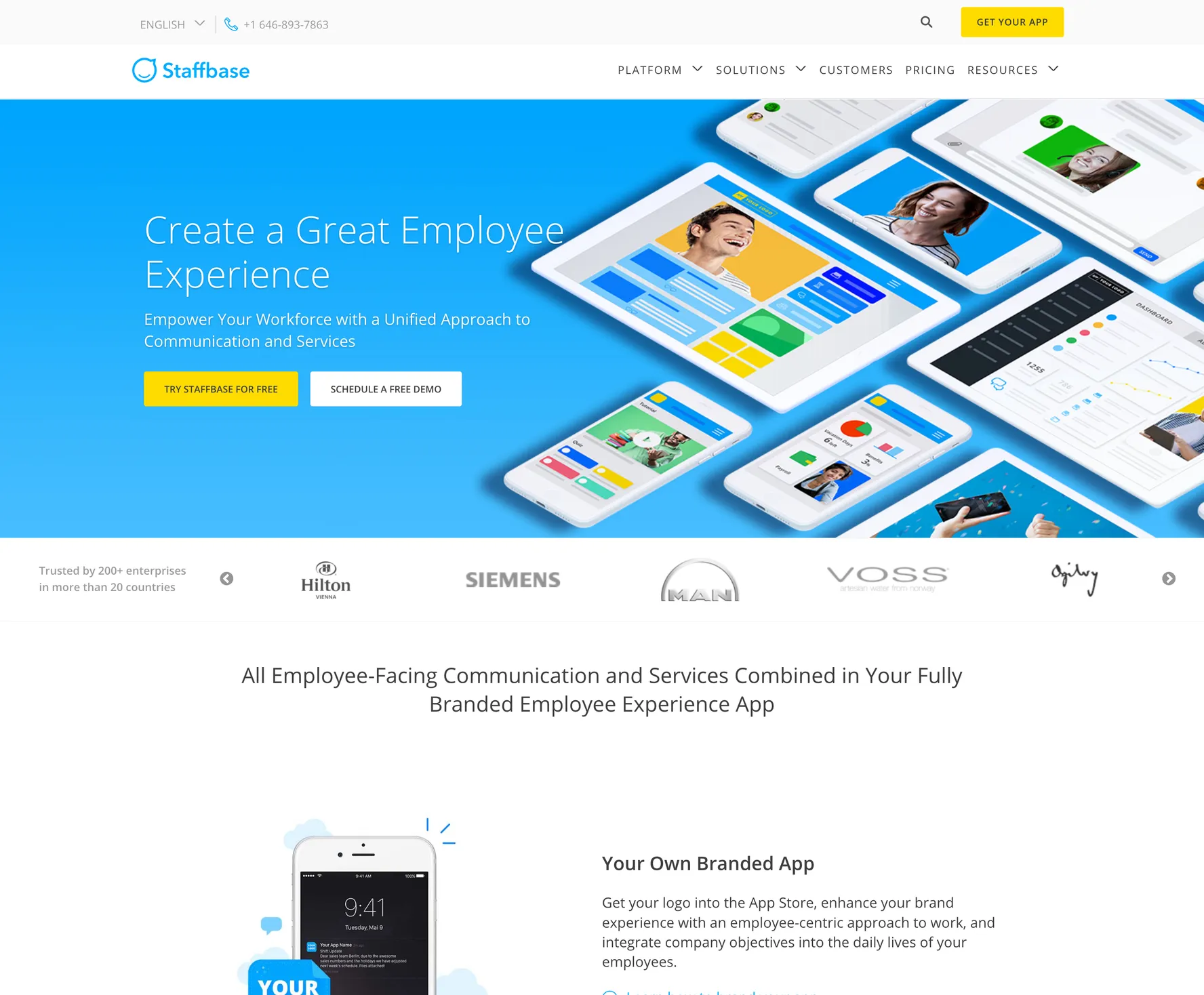
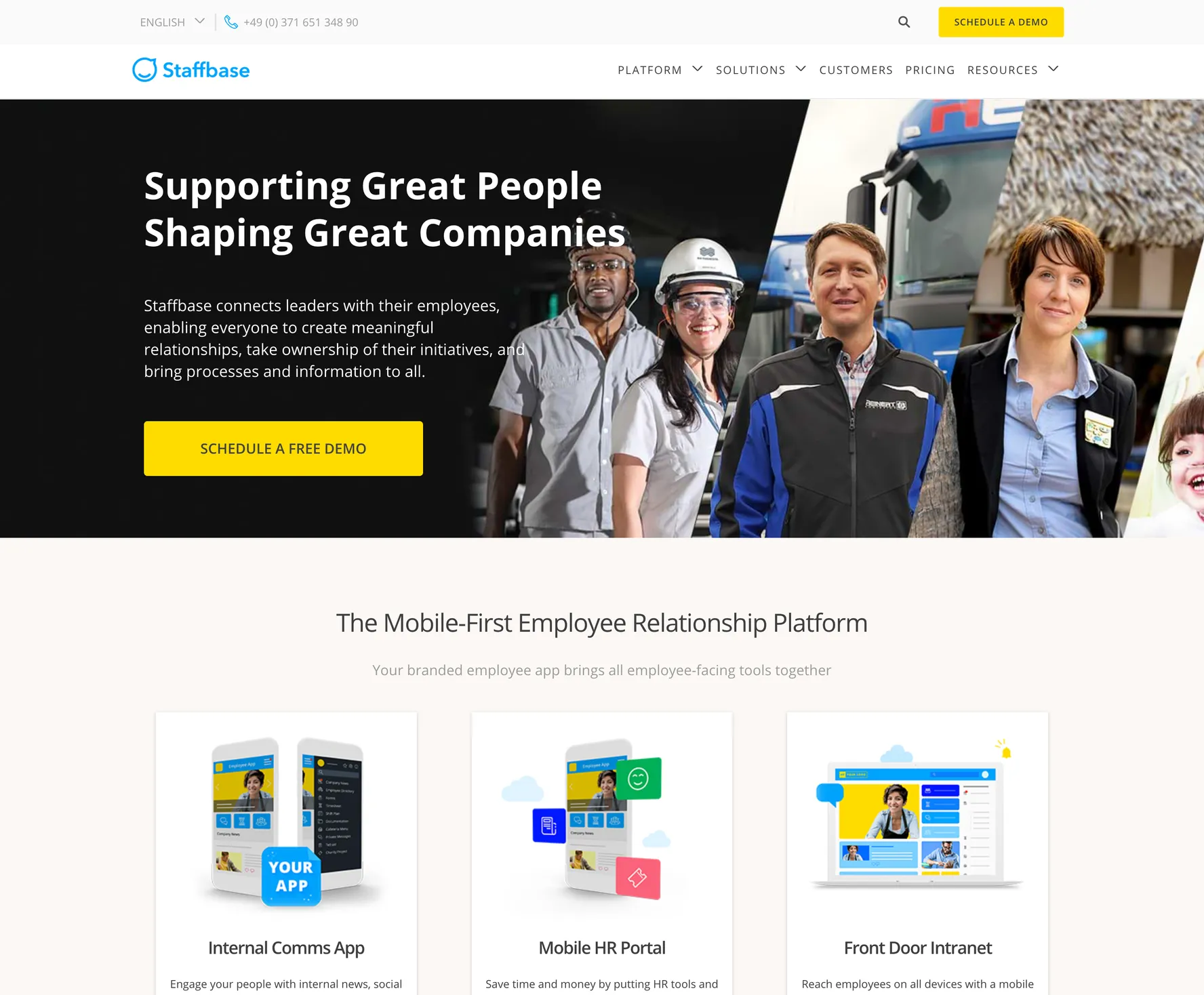
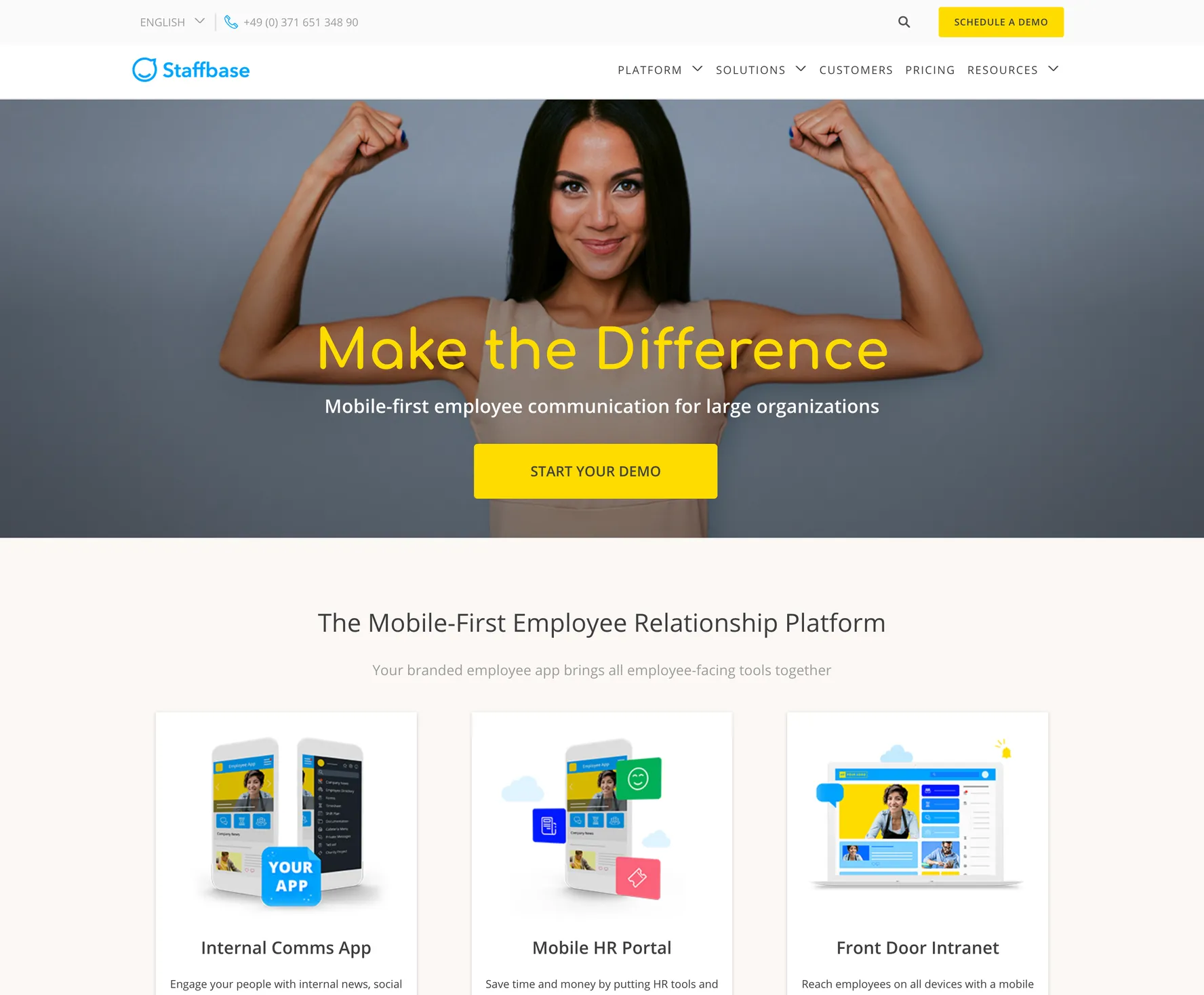
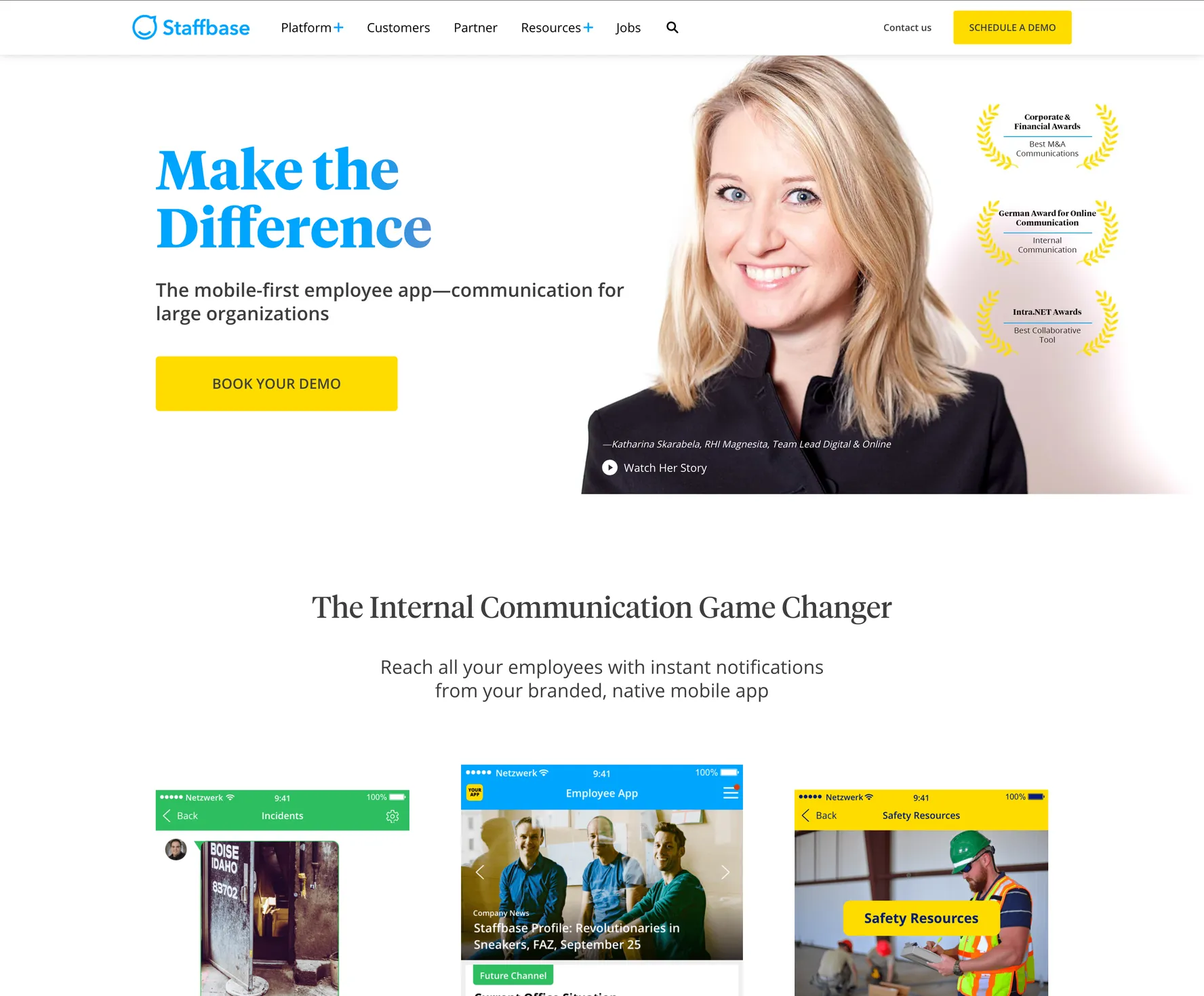
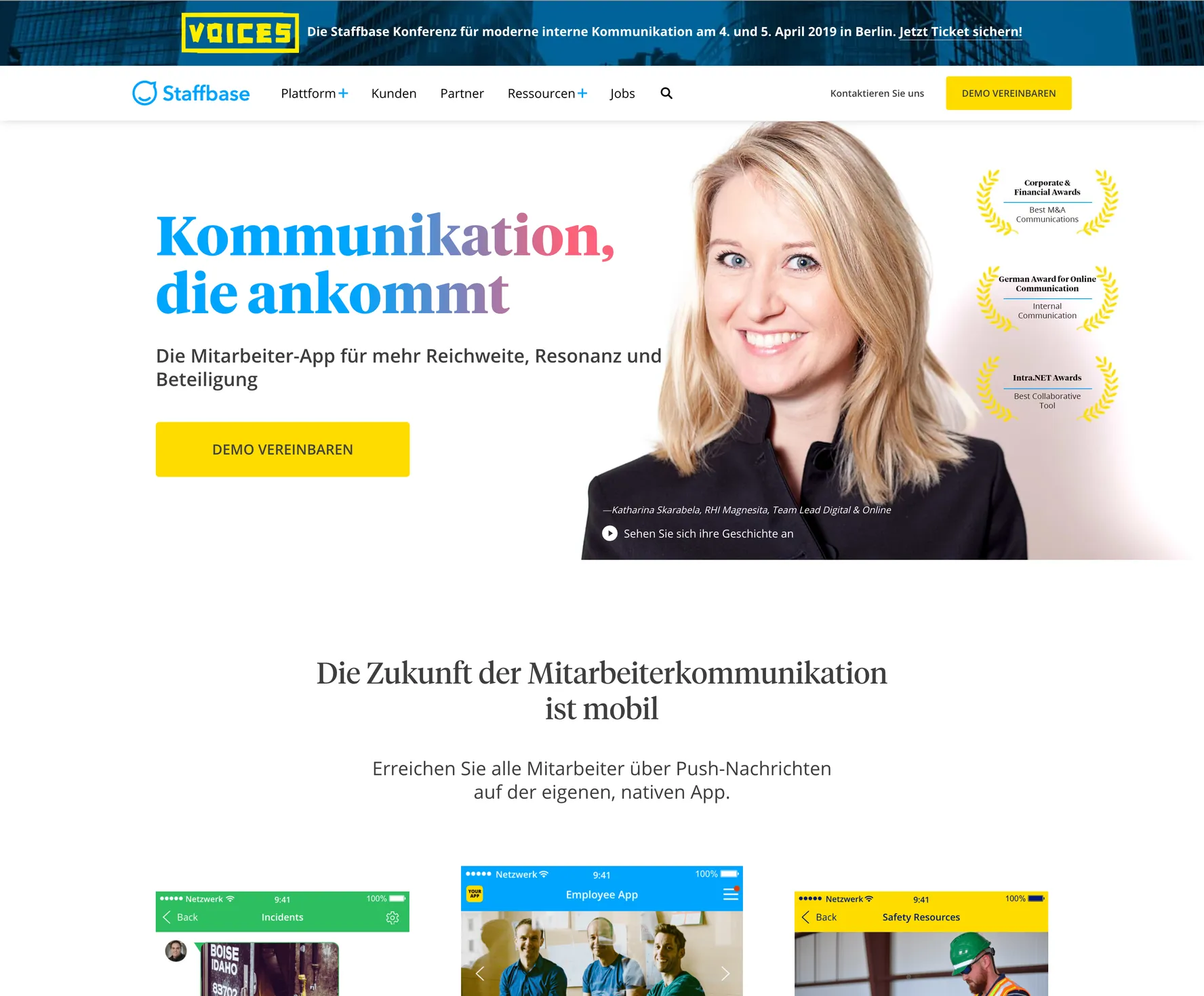
When I arrived, staffbase.com was a basic WordPress site with no real design system. Some modules existed, but they were built to solve immediate needs: not to scale, not to be reused consistently, not to grow into something others could build on. There were no documented standards and no conventions for how pages should be built.
I started from that. Within the first year, our art director and I rebuilt the demo request flow (the demo pages themselves and what happened after someone submitted the form) and I created new modules with significantly more flexibility and capability than what was there. The visual decisions made in that first year, quietly, became the foundation everything after was built on.
2019 - First voice
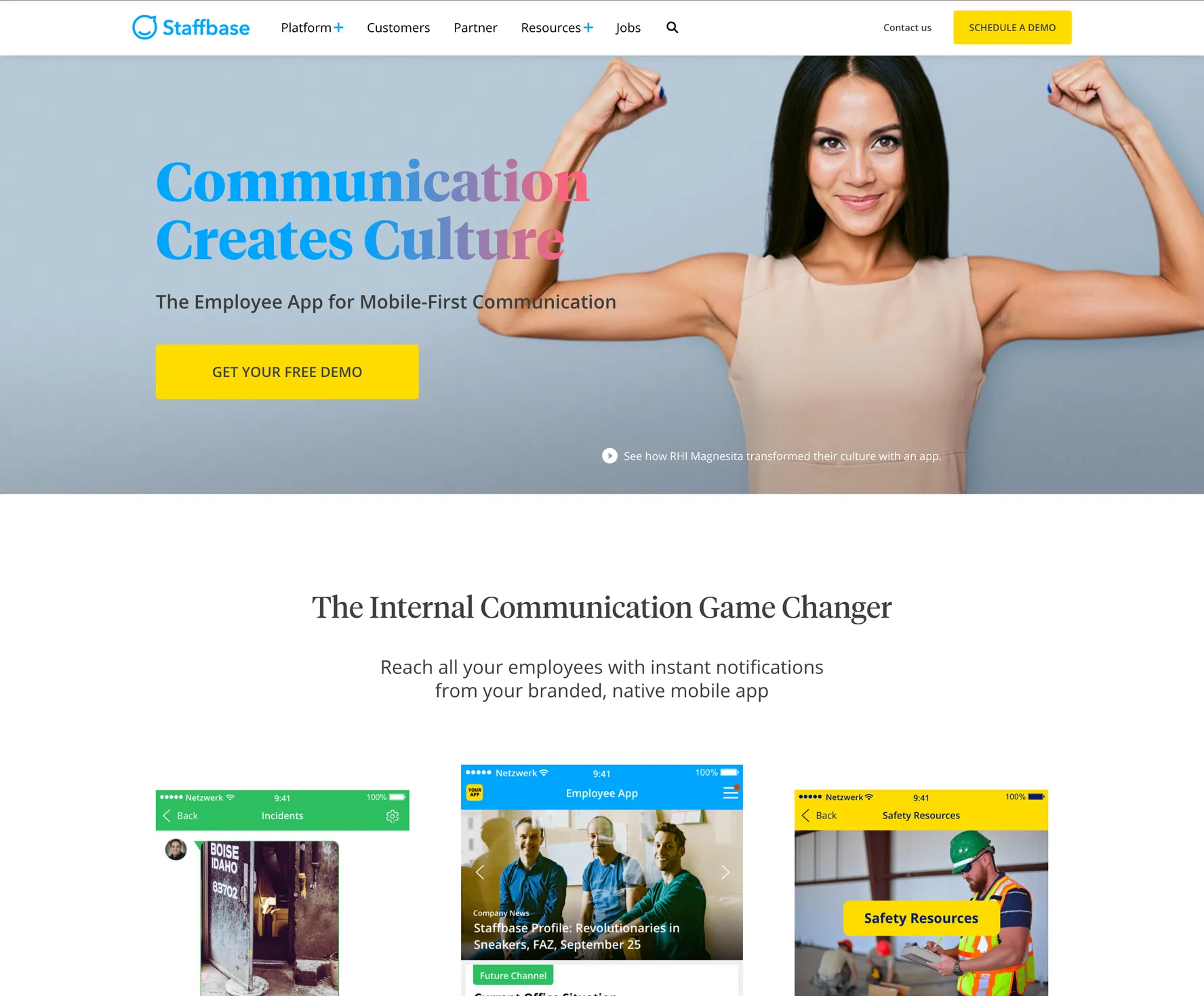
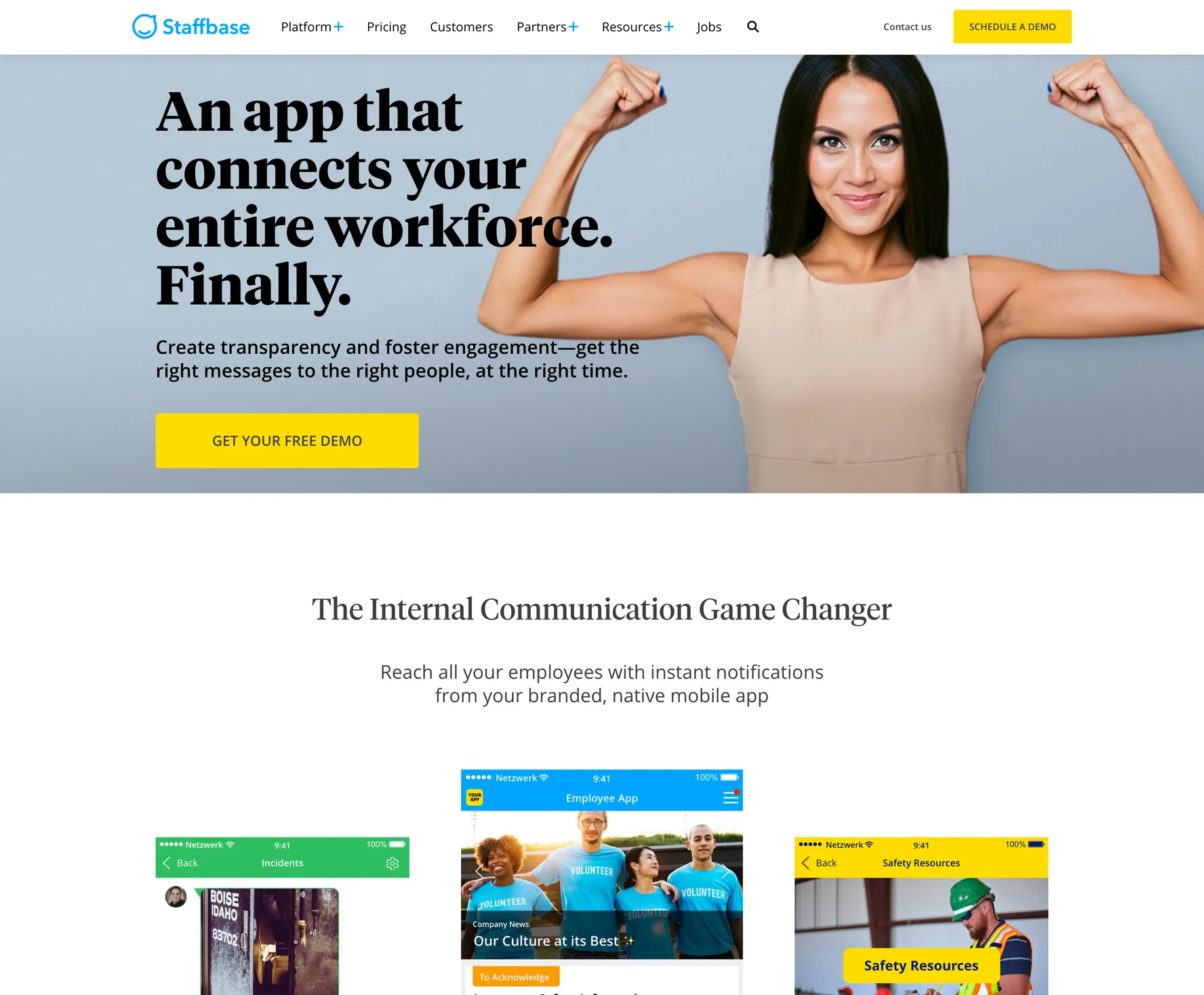
By 2019, the site had a voice. Module patterns were emerging, landing pages were consistent, and the webinar and events infrastructure was in place. The VOICES conference website also existed during this period, though at the time it was plain HTML maintained by an external agency; I collaborated with them, gave feedback, and pushed code live, but it wasn’t yet something the web team owned end to end.
The year was about depth: not just building pages, but building a system that could be extended without breaking, and standards that could be understood by anyone who joined the team next.
2020 - The team grows
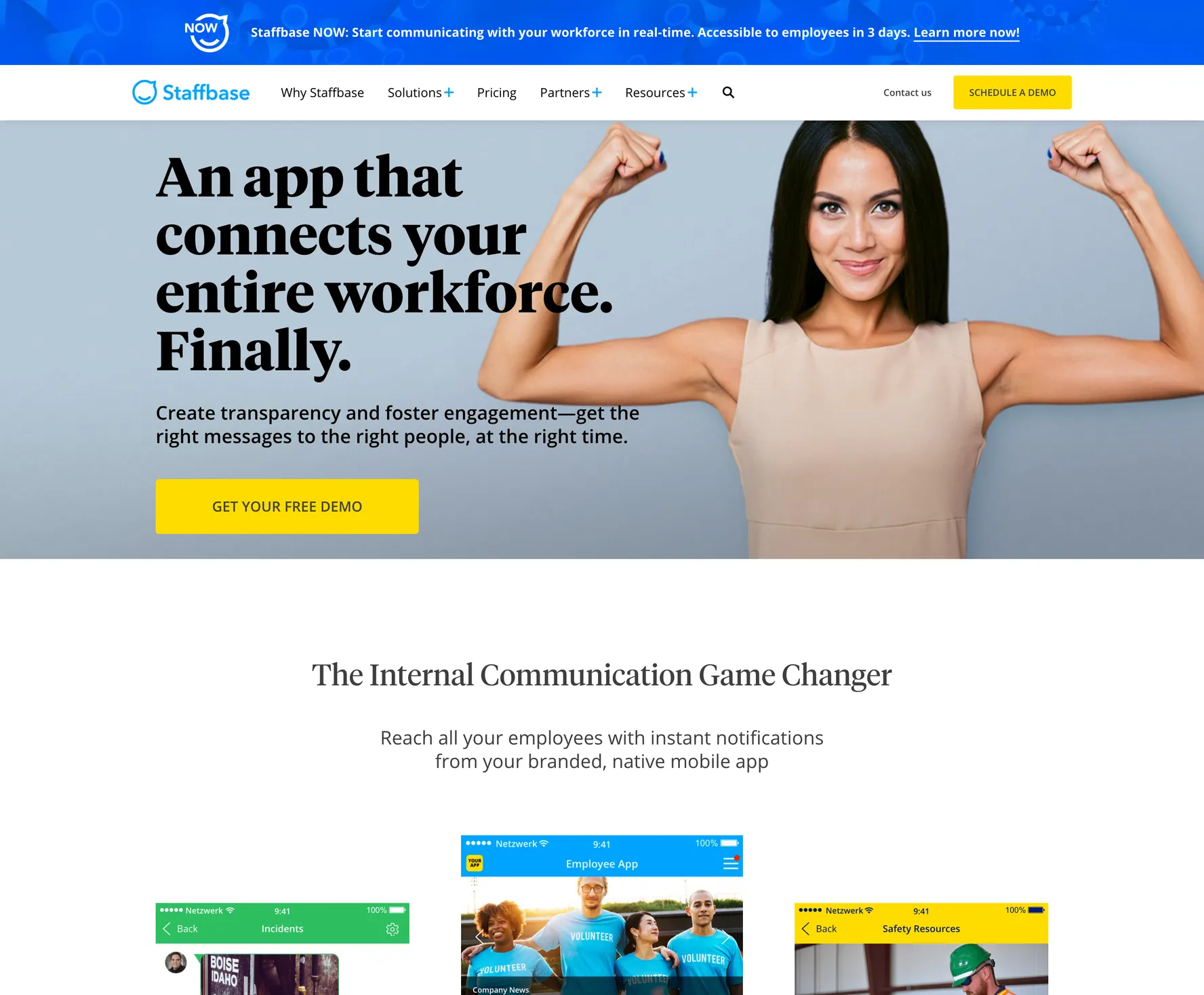
My first hire joined in January 2020. I had his onboarding ready before his first morning: Confluence documentation, a module styleguide, Jira access, everything structured to get him building on day one rather than reading emails.
The website began to reflect what a small, focused team could do when not stretched thin: more consistent, more considered, a more confident visual language. In summer 2020, we brought the VOICES website fully in-house: rebuilding it on Eleventy in a proper repository, hosted on Netlify, the setup that’s still running today. It was the moment VOICES went from “agency site we feed code to” to a Staffbase web property in the truest sense, and it ran its second edition that year as it began to scale across regions.
2021 - Acquisition complexity
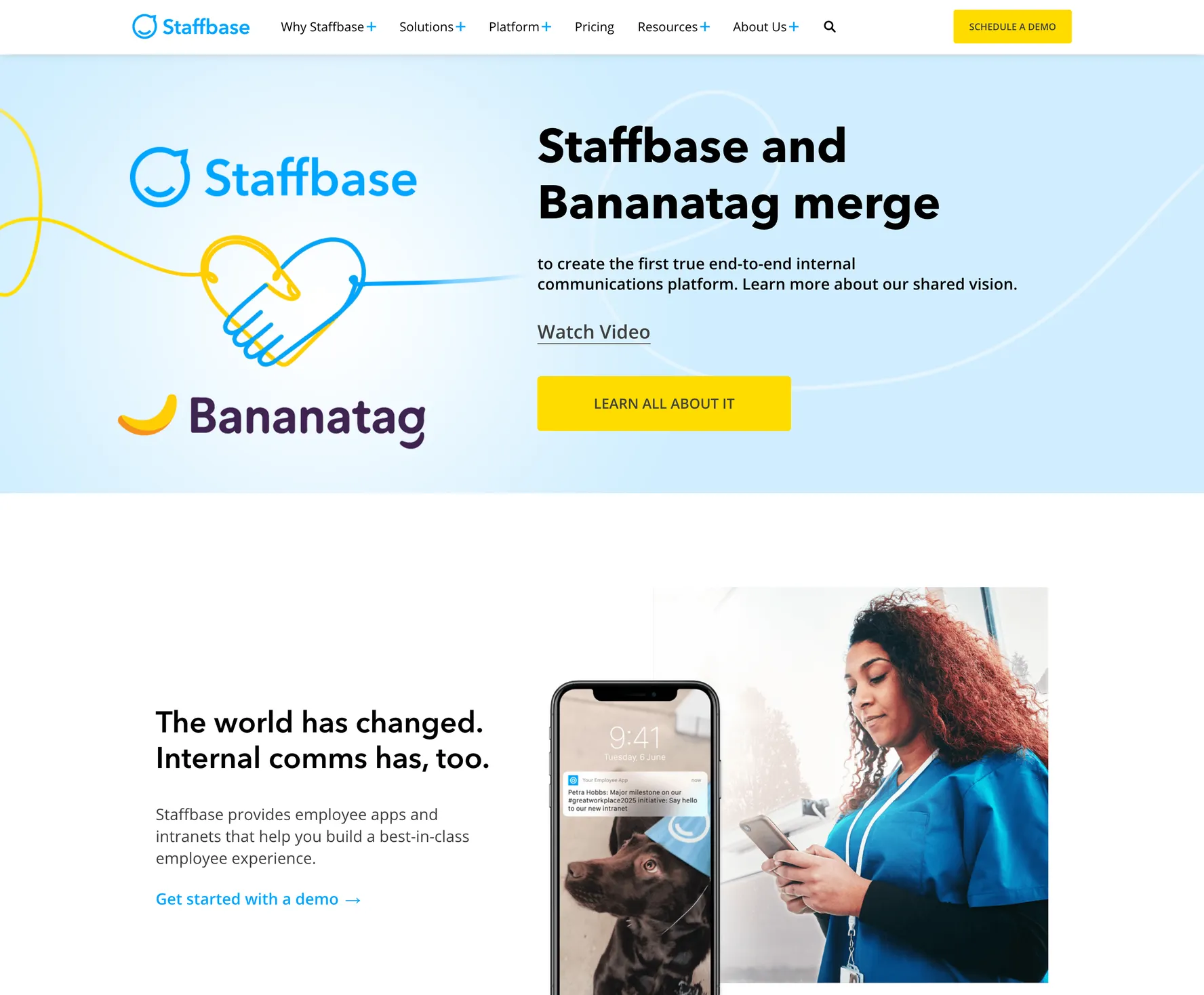
2021 was the year complexity arrived. Bananatag was acquired and its web presence (domain, content, brand) needed integrating into the Staffbase web estate. A second developer and UX designer joined, based in Vancouver. I flew there to onboard him in person.
Suddenly the web team wasn’t managing one brand but several: staffbase.com, bananatag.com in transition, the VOICES network, the careers site, and the growing HubSpot landing page infrastructure. Maintaining visual consistency across that surface area required decisions about what could flex and what couldn’t.
2022 - Beneath the surface
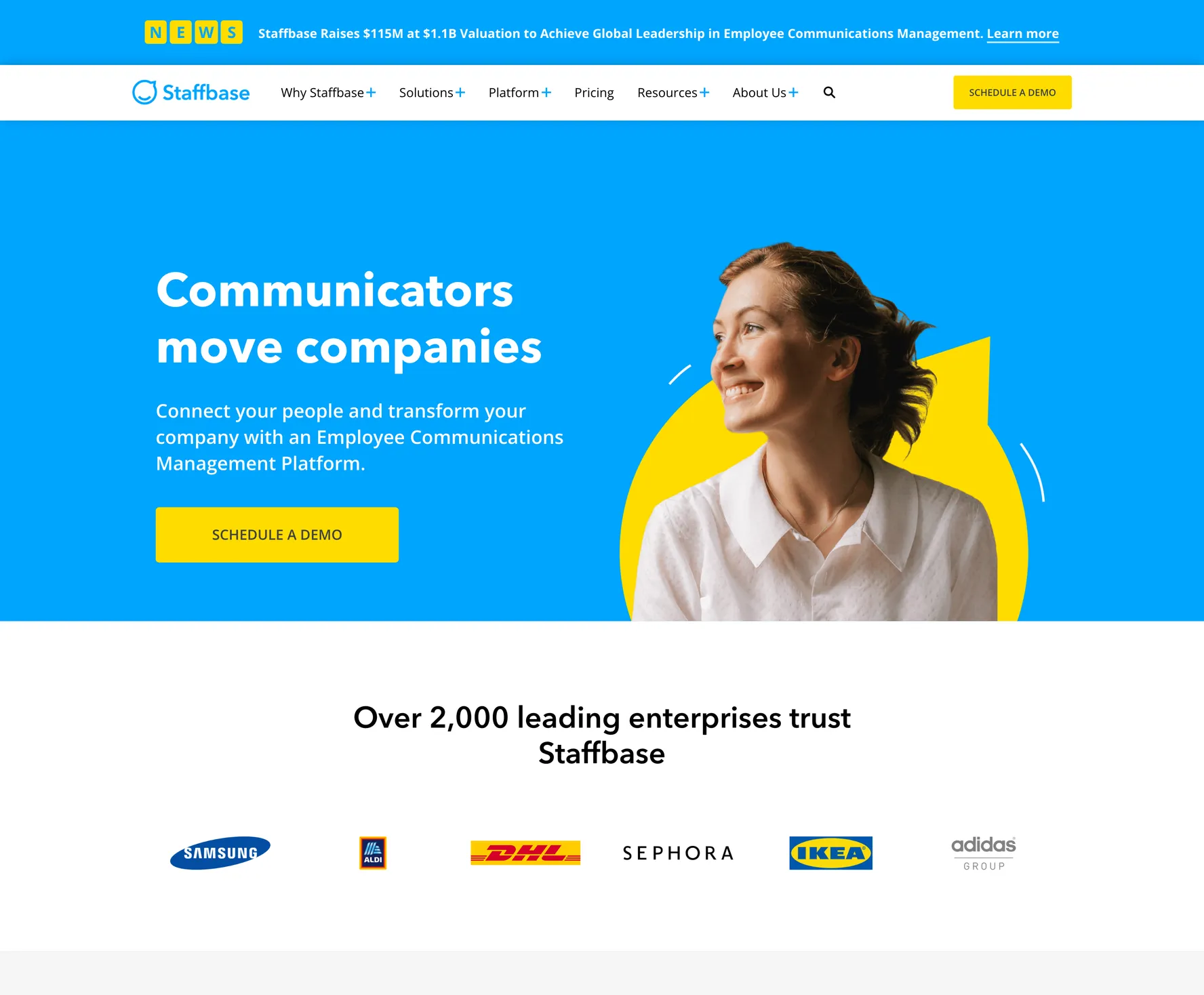
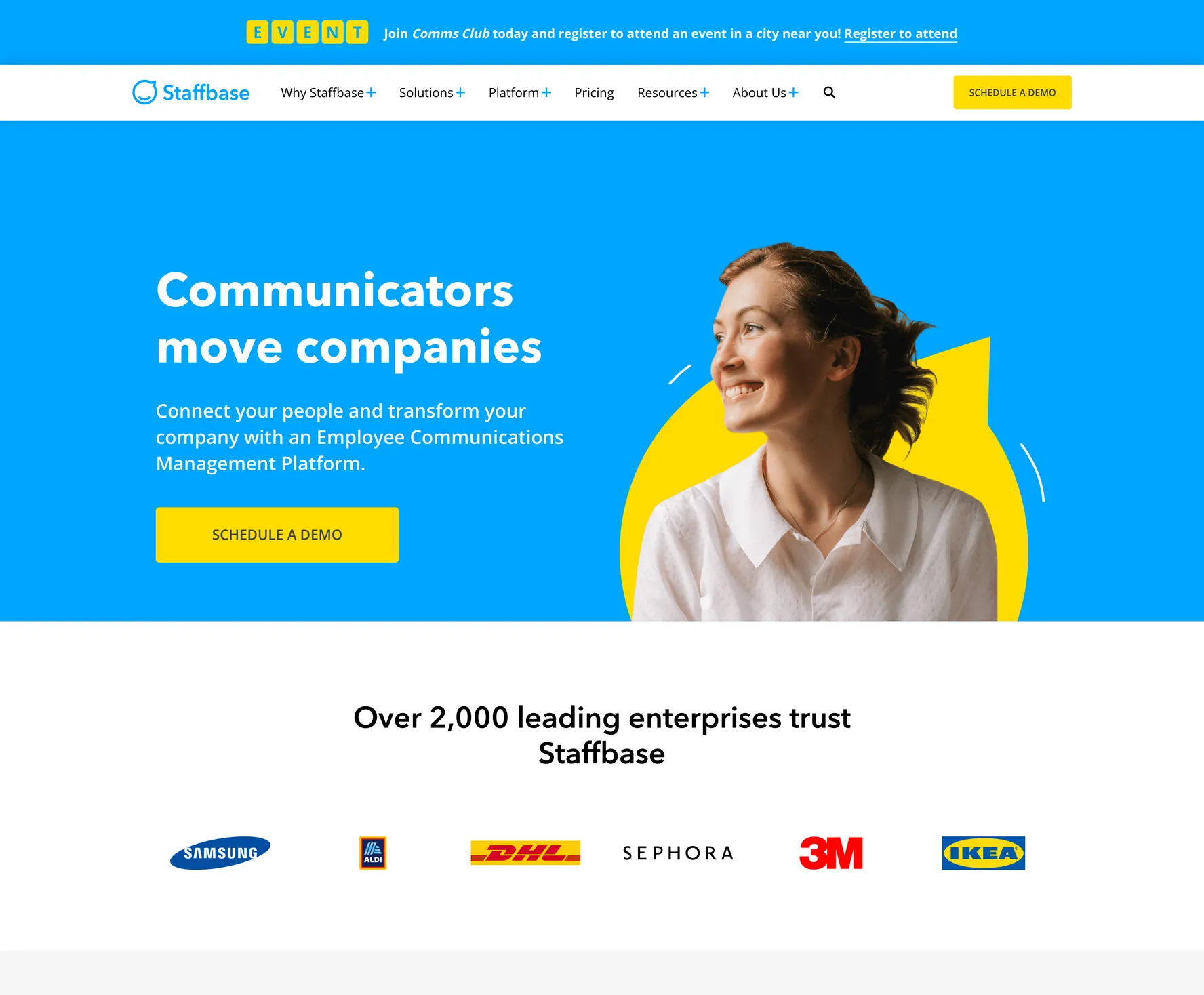
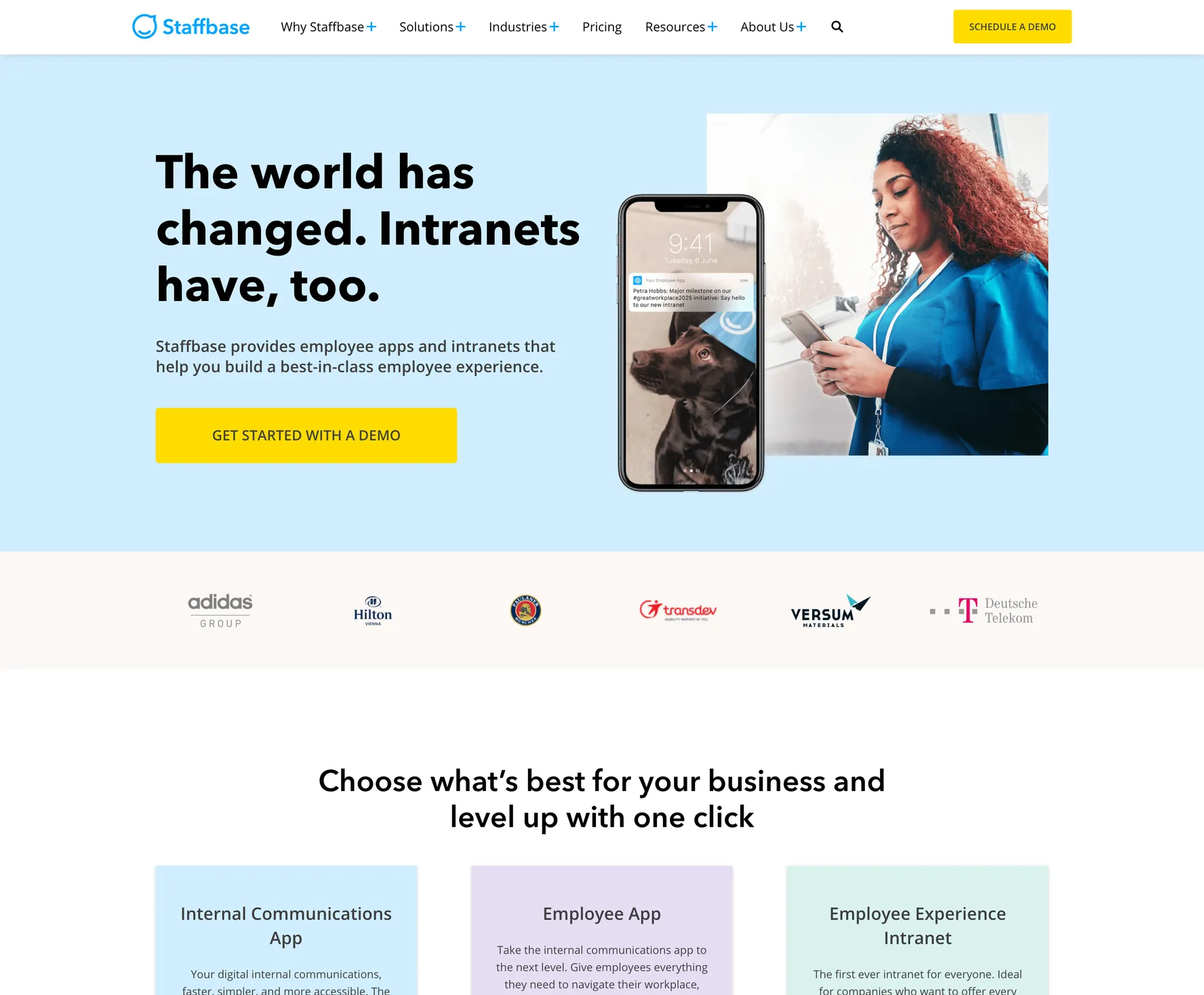
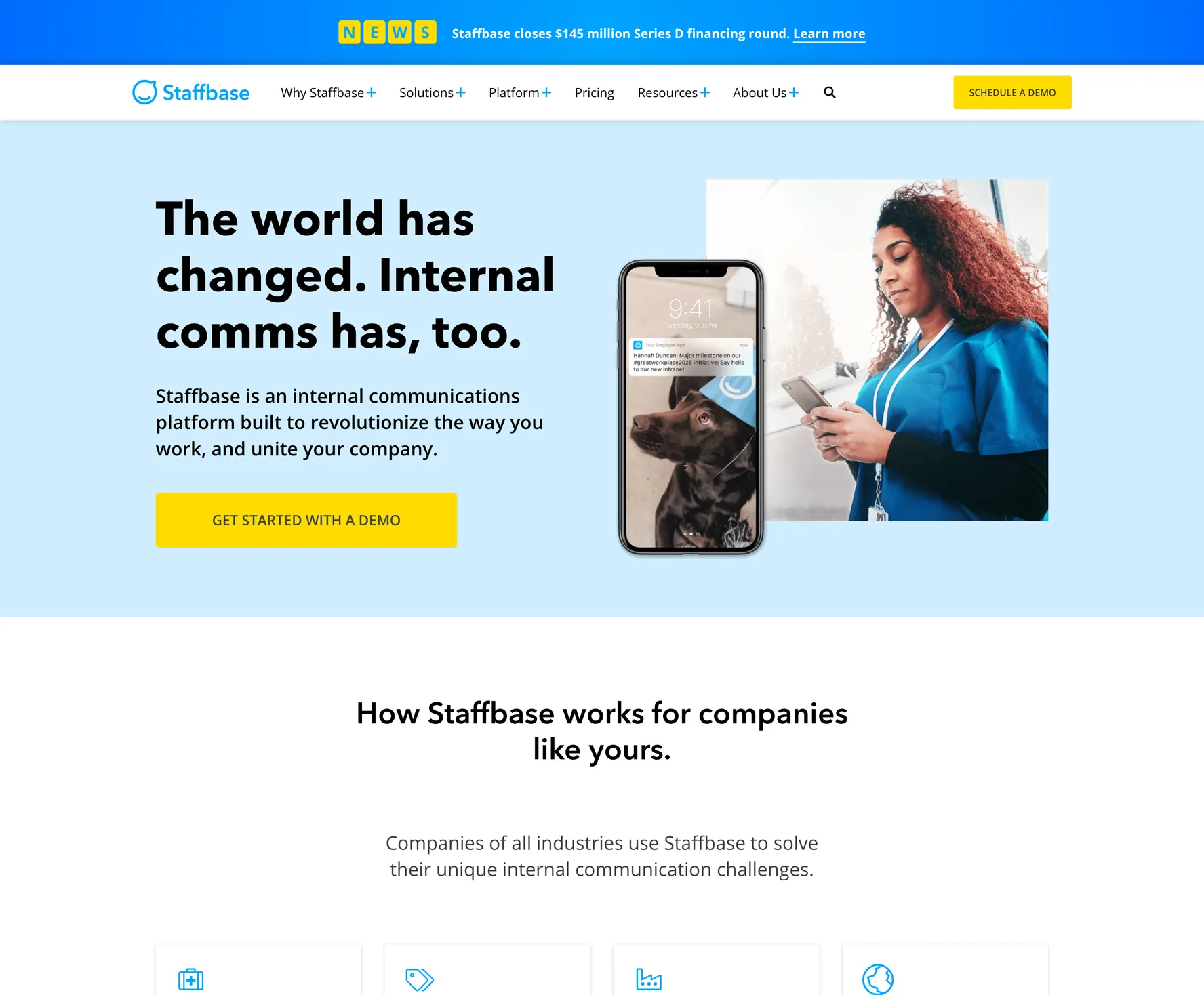
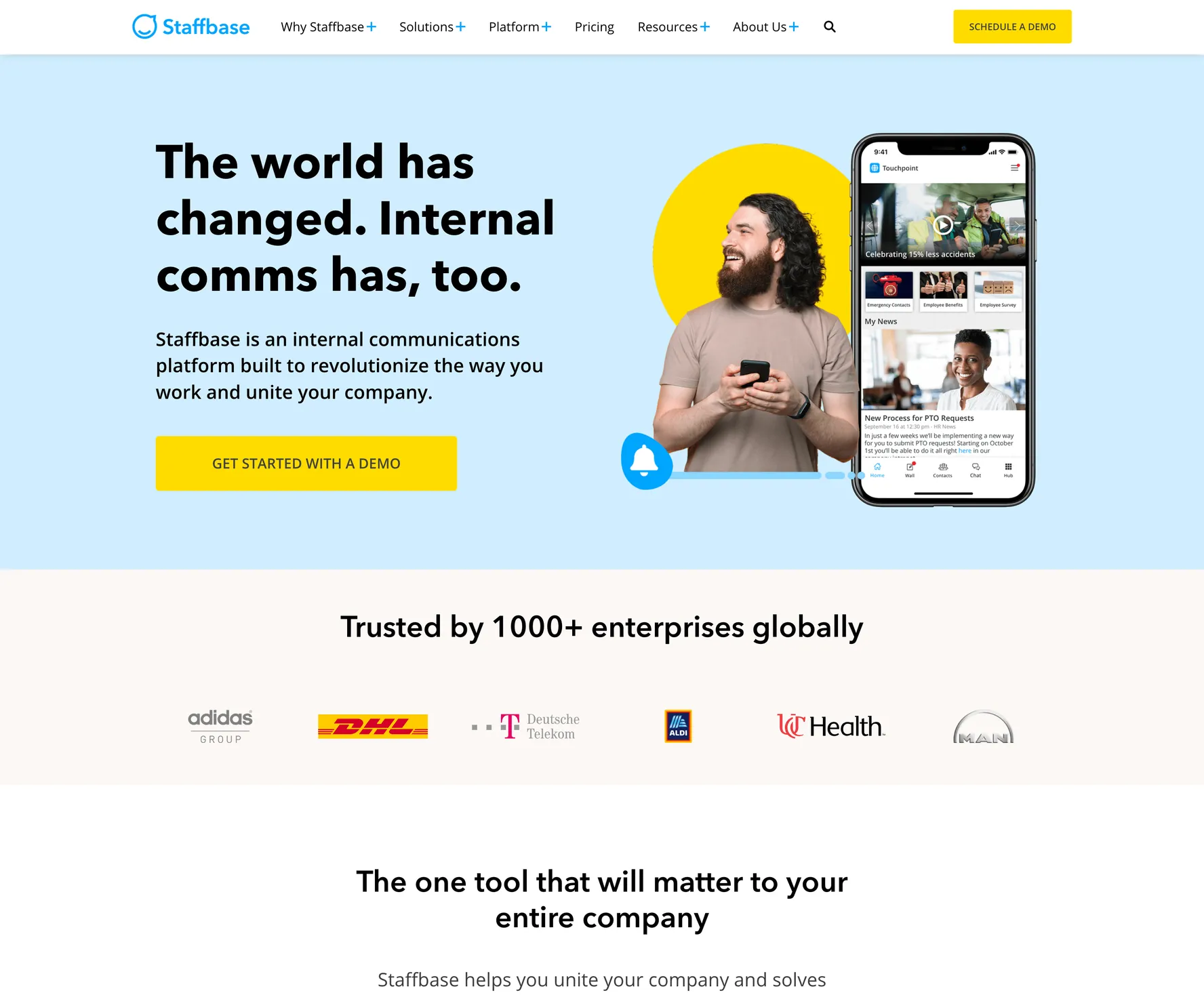
Between 2020 and 2022, Staffbase absorbed three other acquisitions (Teambay, Valo, and dirico), each arriving with its own domains, content, design assets, and brand language. From the outside, the homepage barely changed in 2022, as the screenshots above show. That stability was the point: there was no single rebrand moment to capture, because the work wasn’t visual. It was absorption: reconciling four companies’ worth of web presence into one coherent system before any unified visual identity could land cleanly on top of it.
I led the technical integration. Unifying the visual identity, including new typography (Epilogue for headings, Inter for body), a new color palette, and new spacing and component specifications, wasn’t a single rollout. It was a transformation that started here and continued through 2023, converging gradually across staffbase.com, the blog, the VOICES network, the careers site, and HubSpot templates rather than landing all at once.
The payoff of that integration work showed up over the next two years, not in a single launch, but in the accumulation of changes that follow.
2023 - Iteration at scale
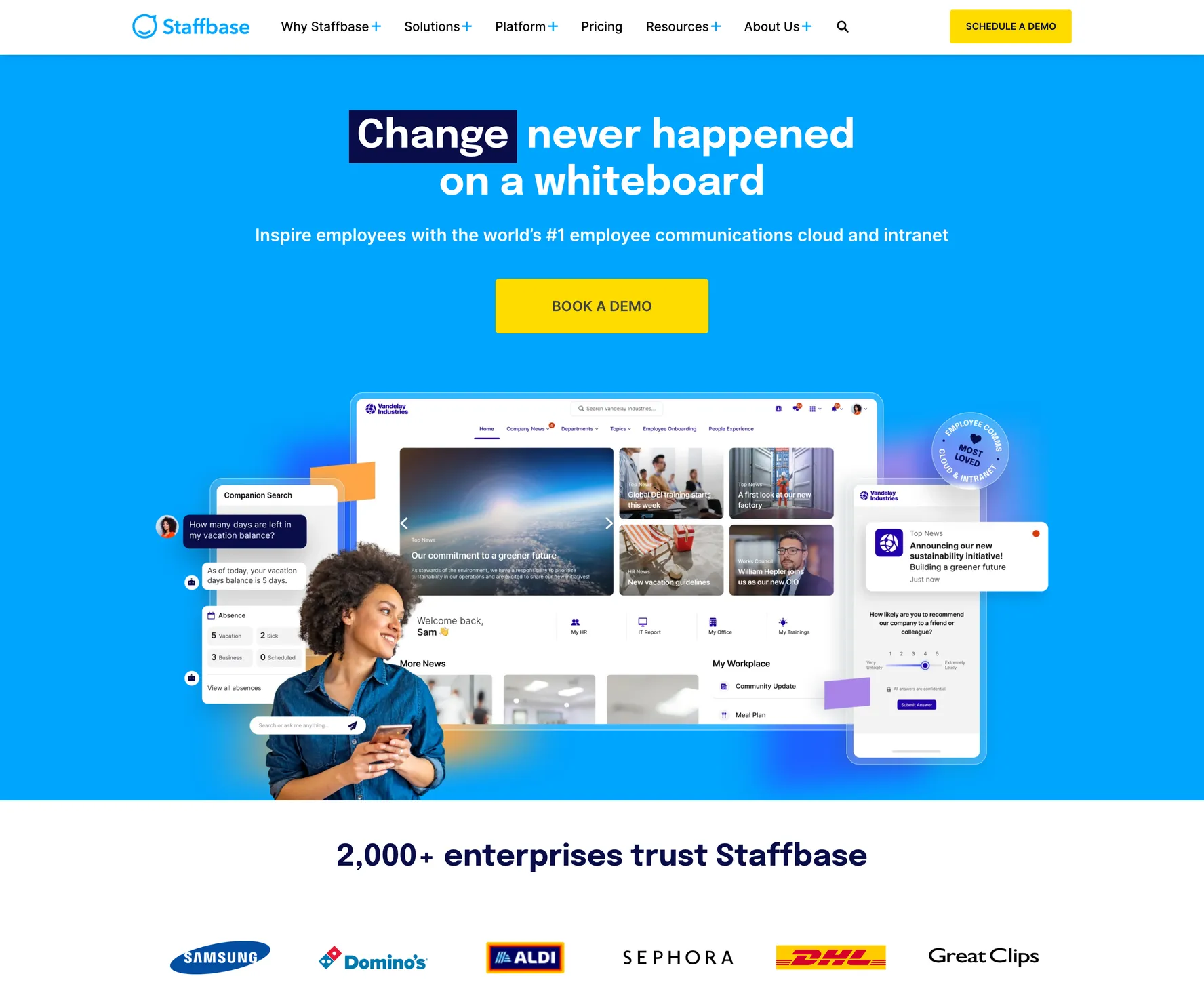
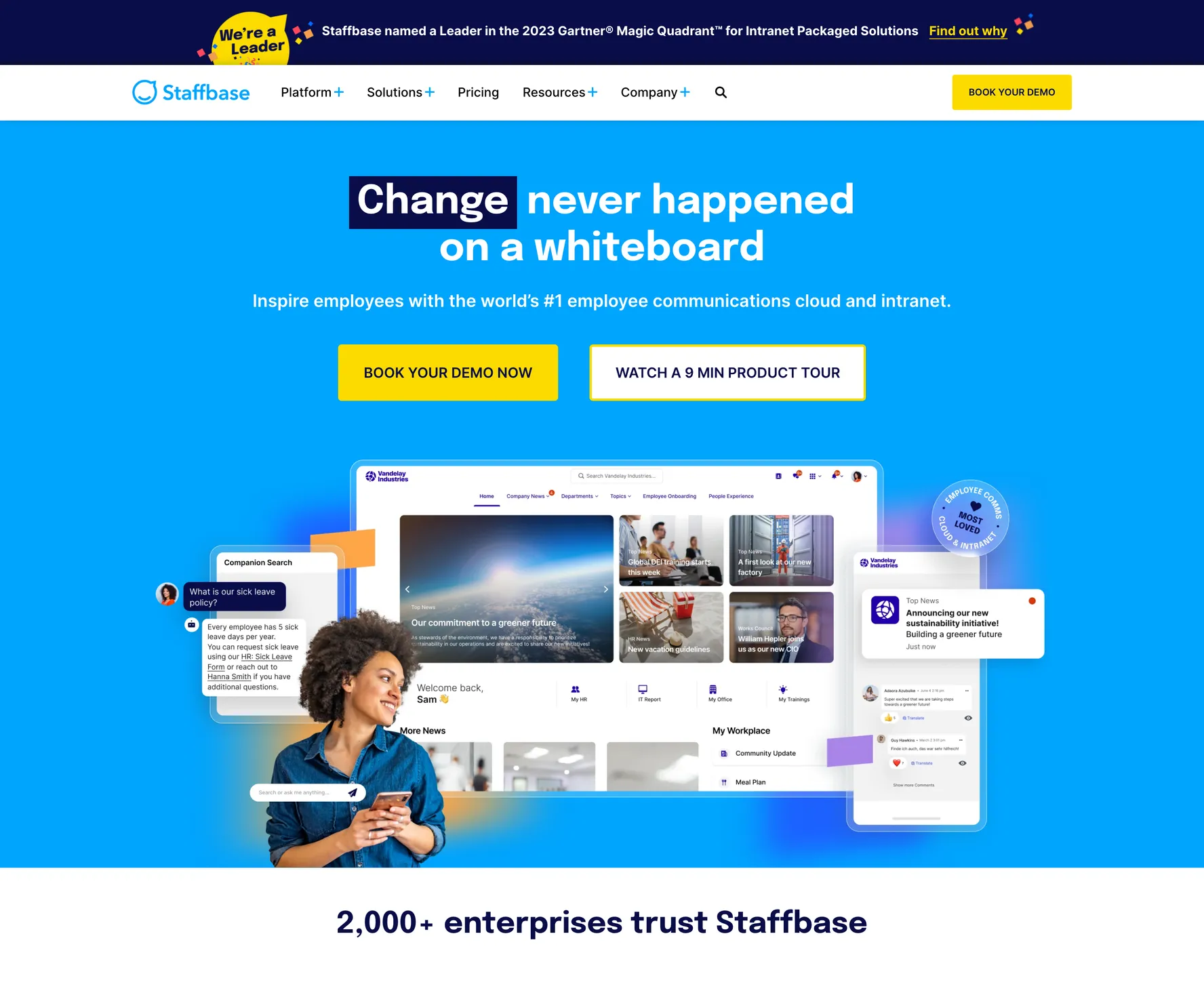
As 2022’s integration work matured into a single coherent visual identity, 2023 was the year the brand found its confidence. The homepage received its first major rework since the acquisitions began. New content formats arrived (podcast, new product pages, campaign work), each one demanding module patterns that hadn’t existed before and leaving them behind for everything that came next. Acquisition integrations completed. A/B tests ran and sharpened what was already there.
Every week that year, something shipped. Not from a formal design system, but from judgment built over years of living in the brand.
2024 - The brand matures
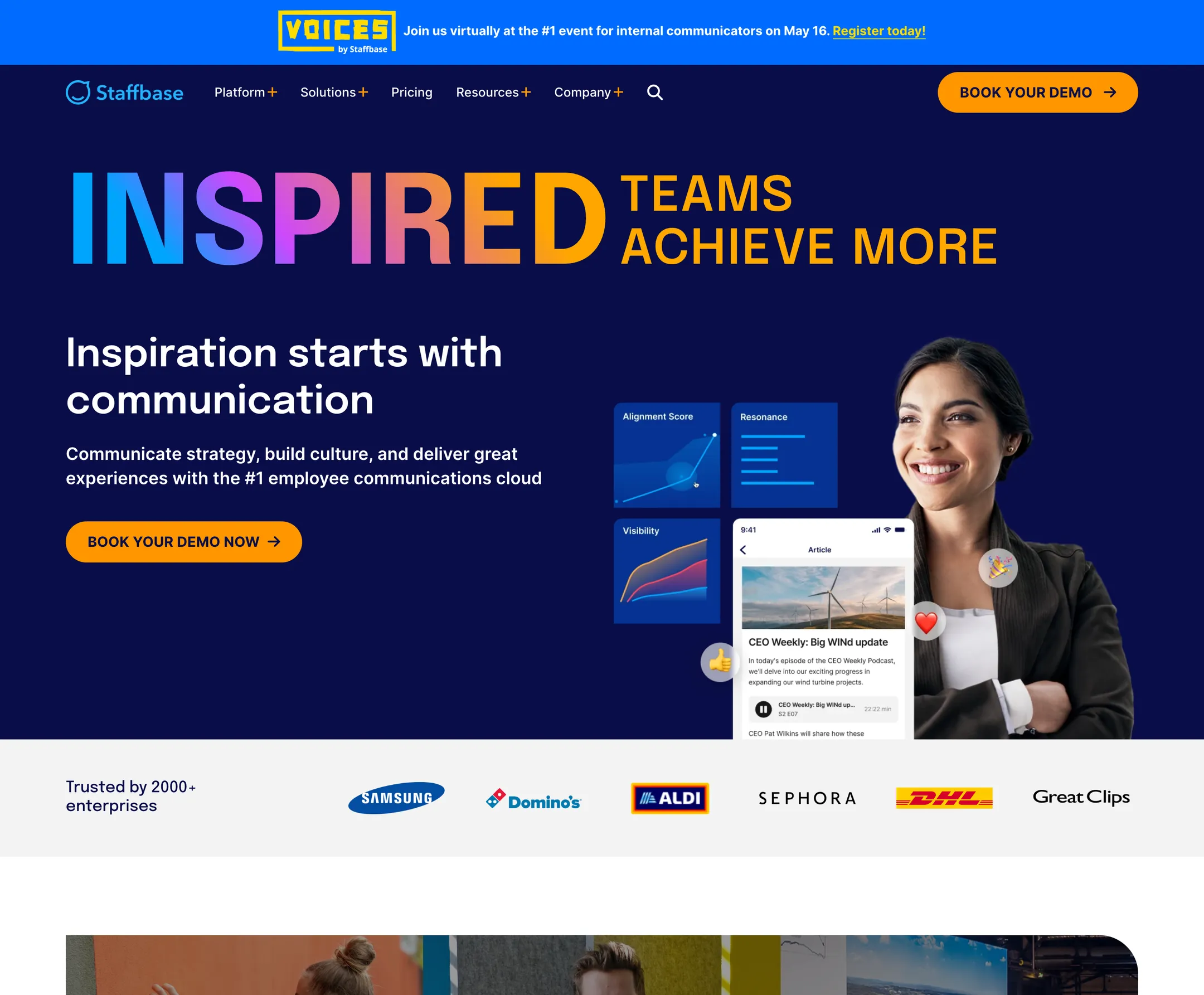
2024 brought the subtler, more confident refinements of a brand that had found its register. The navigation shifted from Staffbase blue to midnight blue across the product website and blog, a change that sounds minor but touched hundreds of pages and required careful regression testing. A second major homepage rework shipped. The Japanese website launched, applying the full brand identity to an APAC expansion from day one.
This was also the year the Web UI Guidelines formalized what had been building for years: shared visual standards for the website and brand design, with the explicit ambition of bringing product design into that same shared language over time.
2025 - The platform shifts
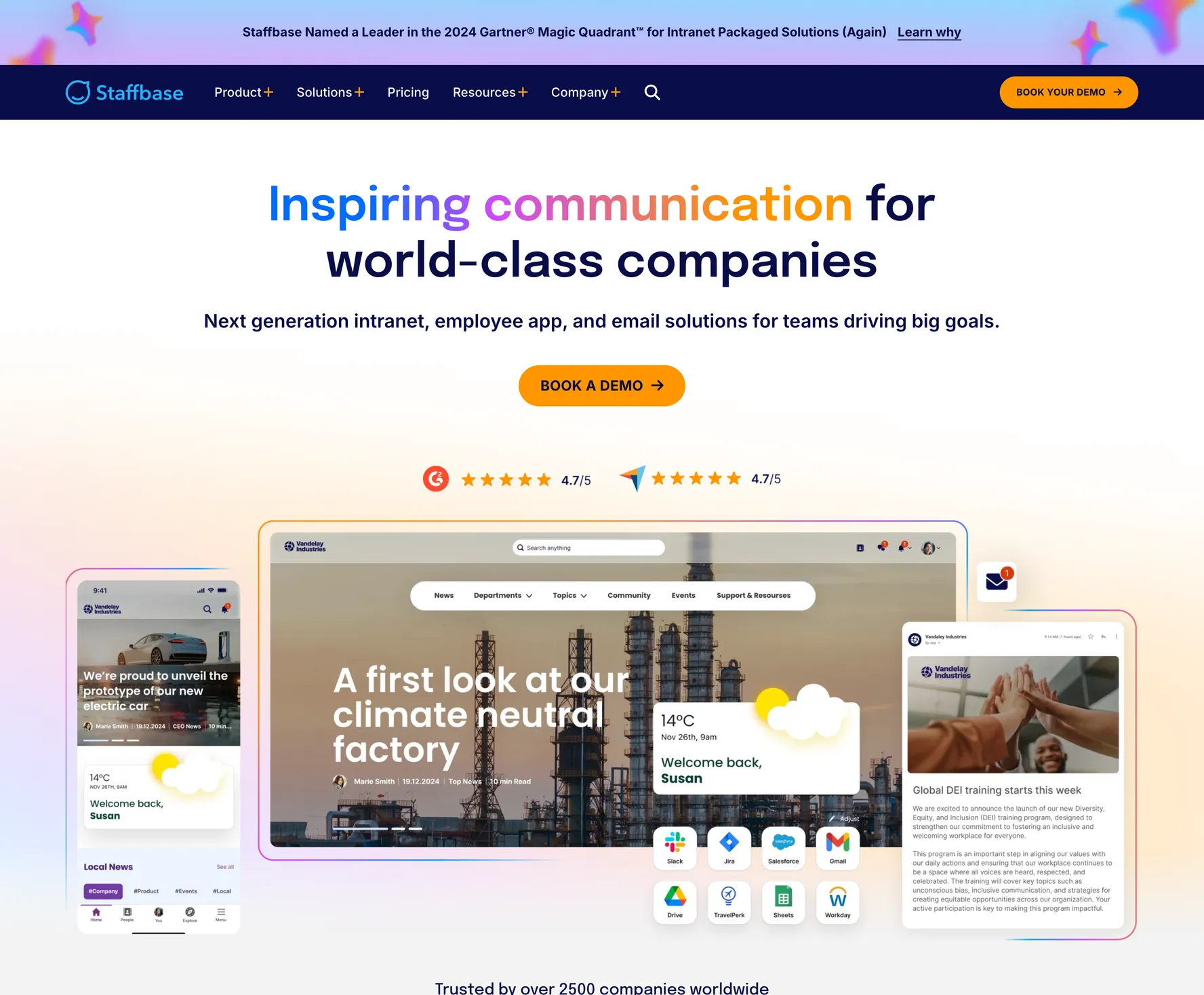
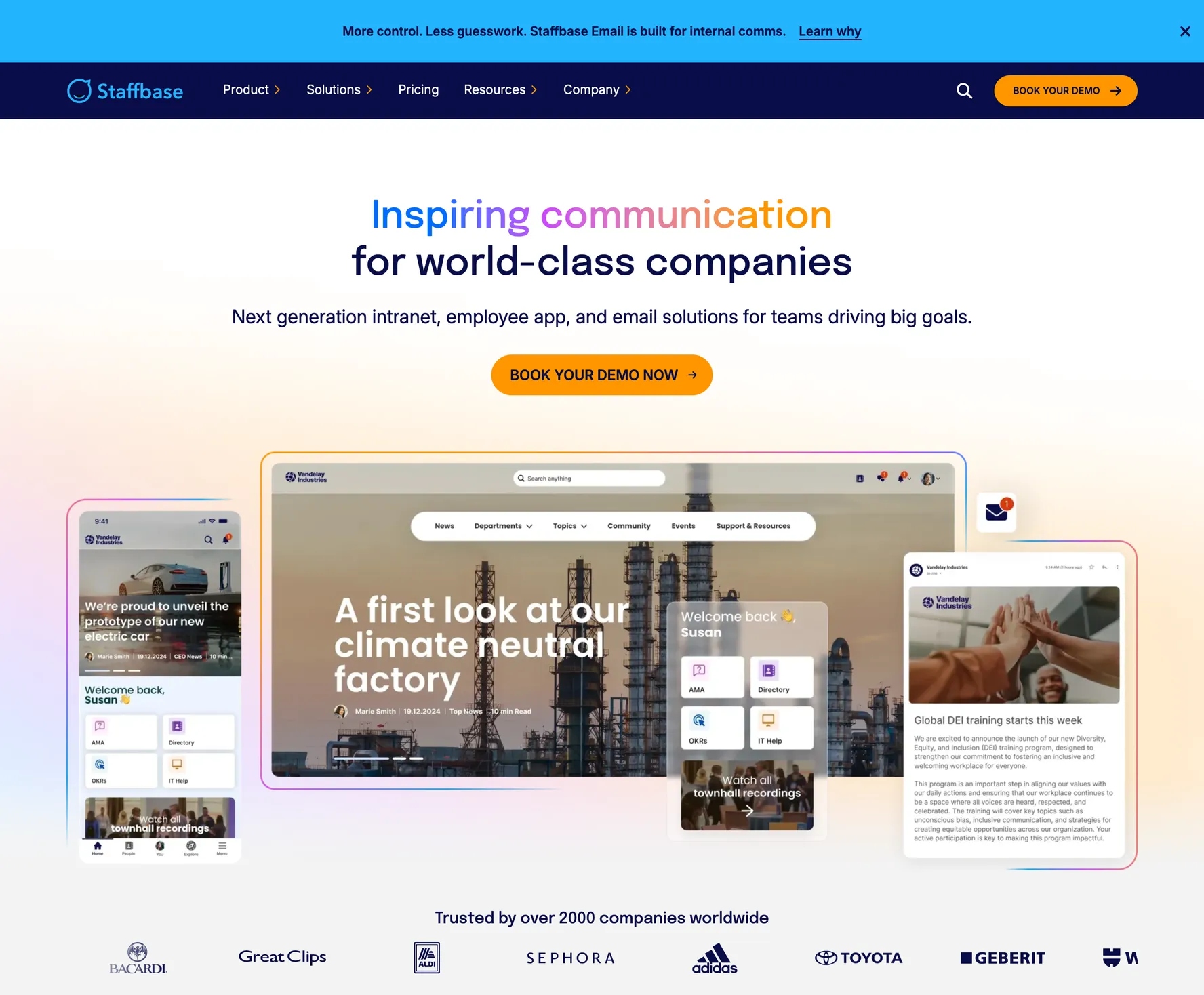
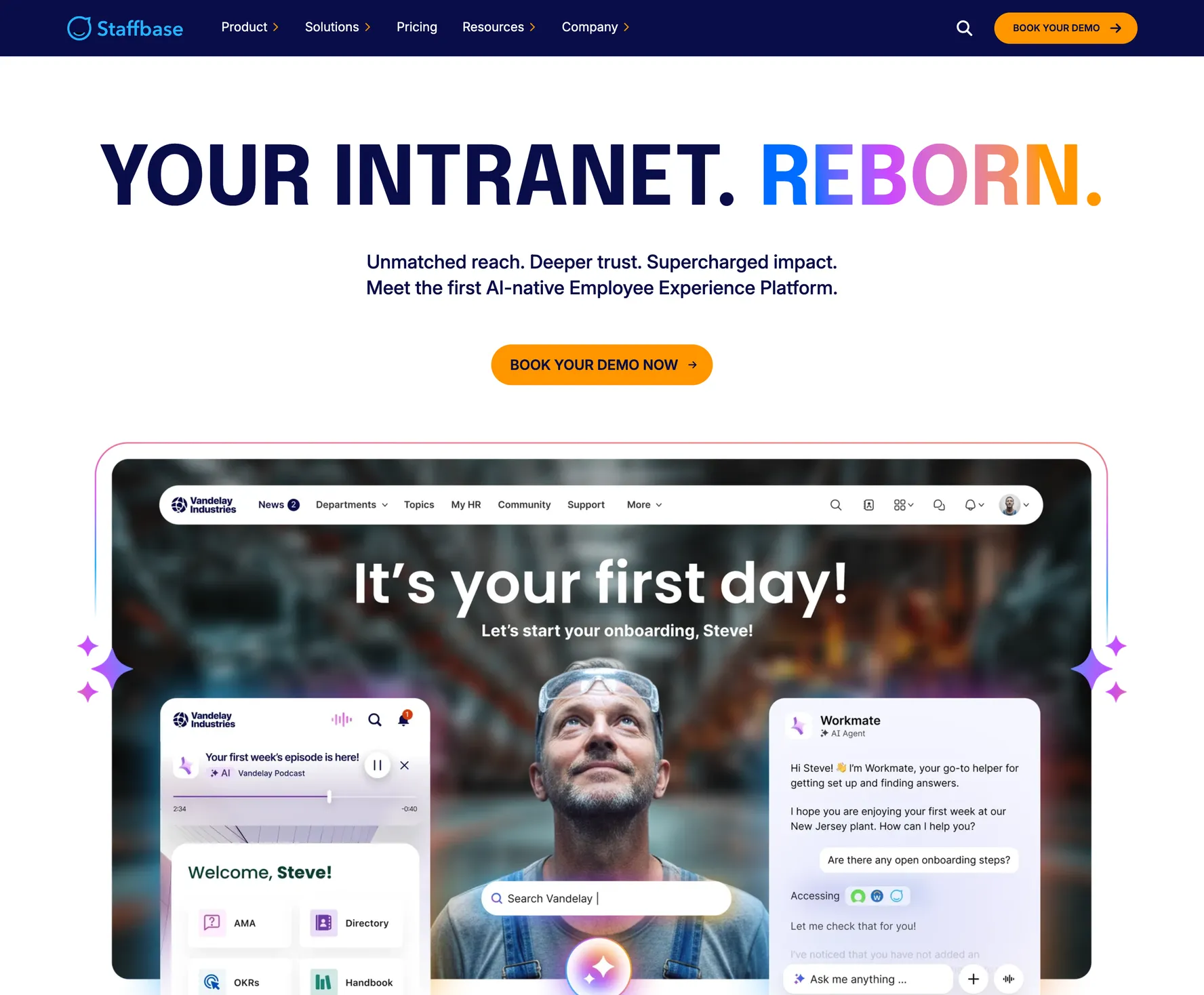
September 16, 2025 was the highest-stakes day. Staffbase made its company-defining pivot to Employee AI, announced by the founders, with embargoed press breaking the same week. The web team delivered the public face of it: a new homepage announcement, a new Employee AI product page, and brand and heading changes rolled out across the entire site. All against a hard, immovable media date.
Earlier that year, at the end of July, the WordPress-to-Storyblok migration launched: the entire product website and blog unified onto a new headless CMS platform. The brand arrived on a fundamentally different infrastructure. In the second half of 2025, the brand extended further: French launched, followed by Spanish, bringing the site to five languages.
2026 - The last iteration
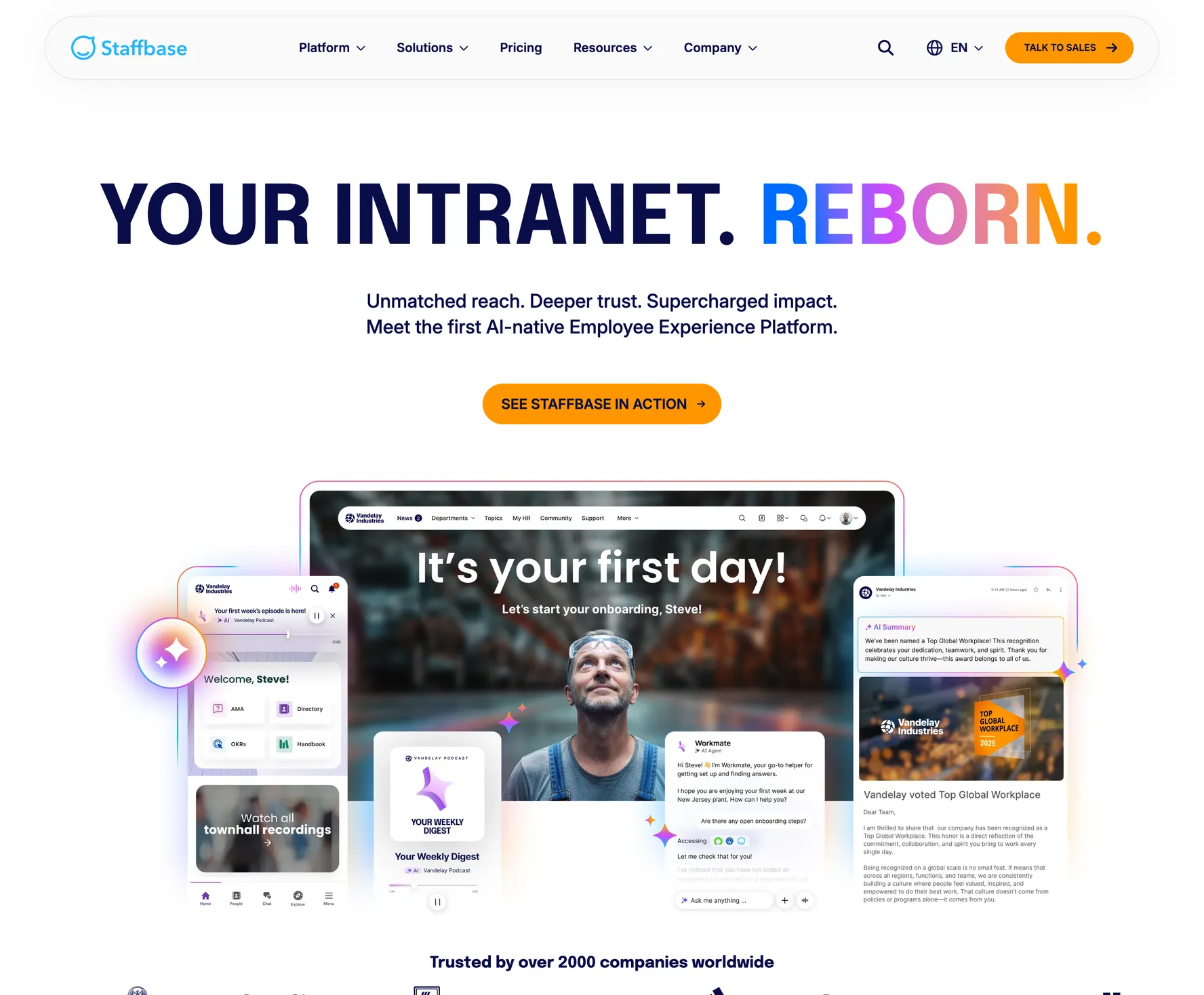
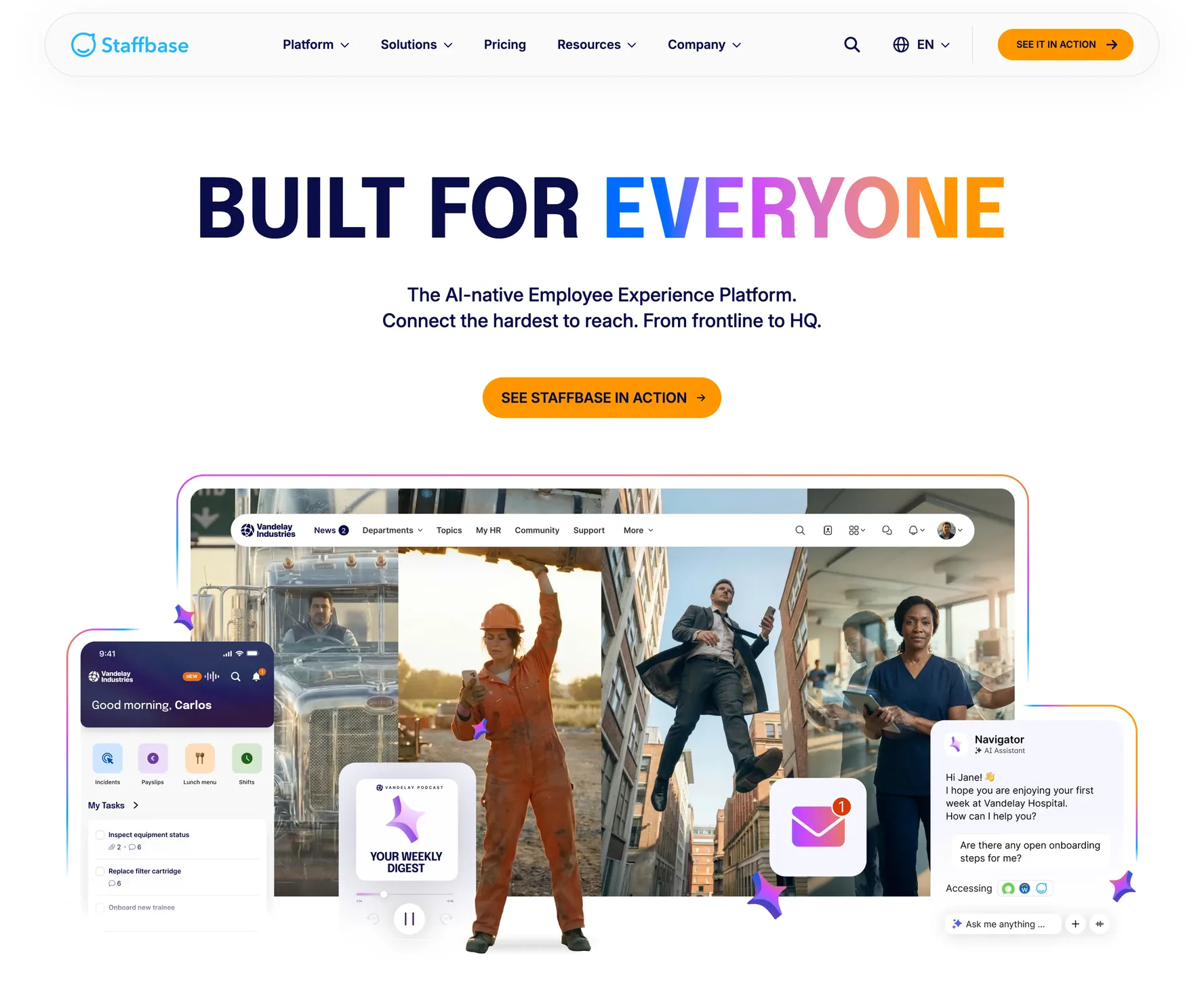
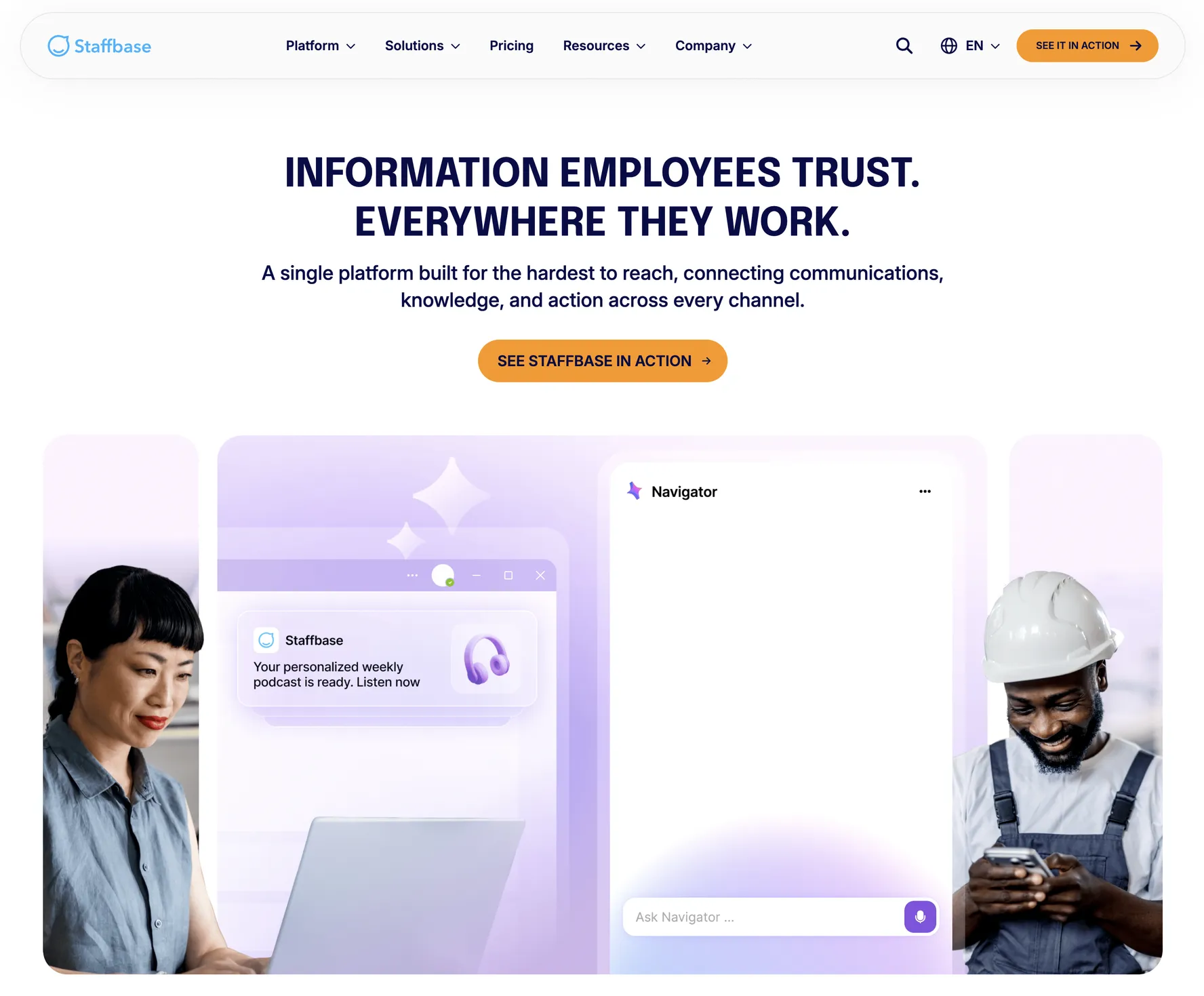
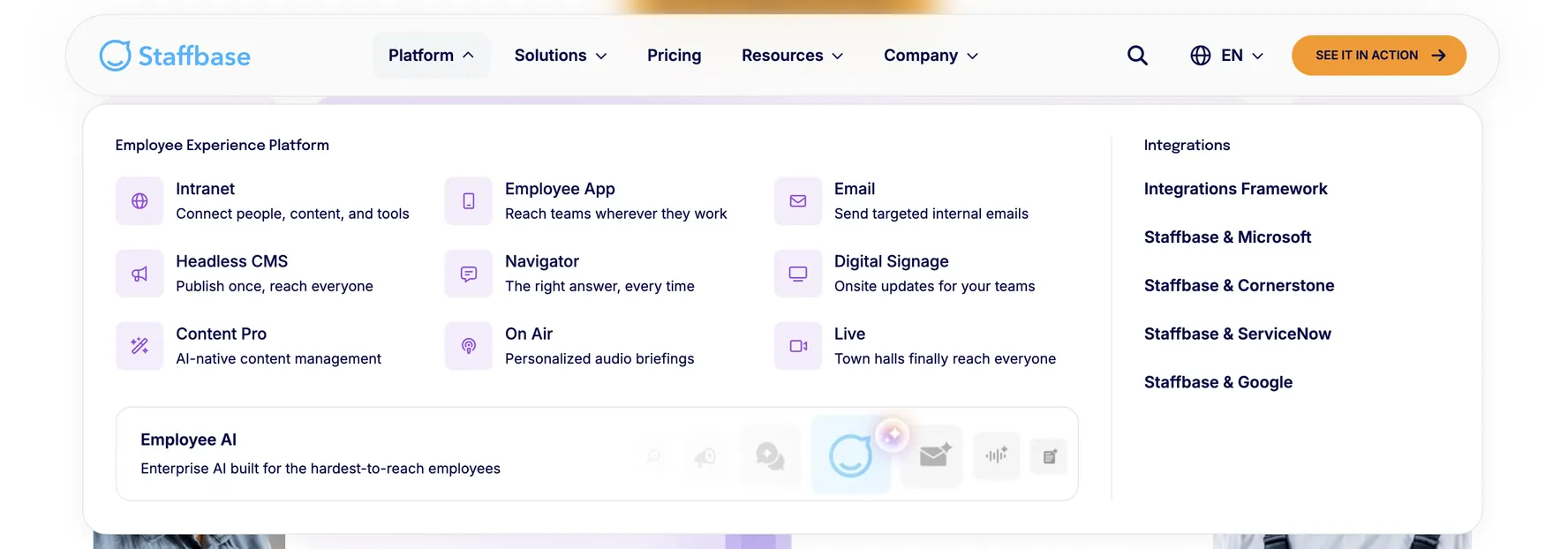
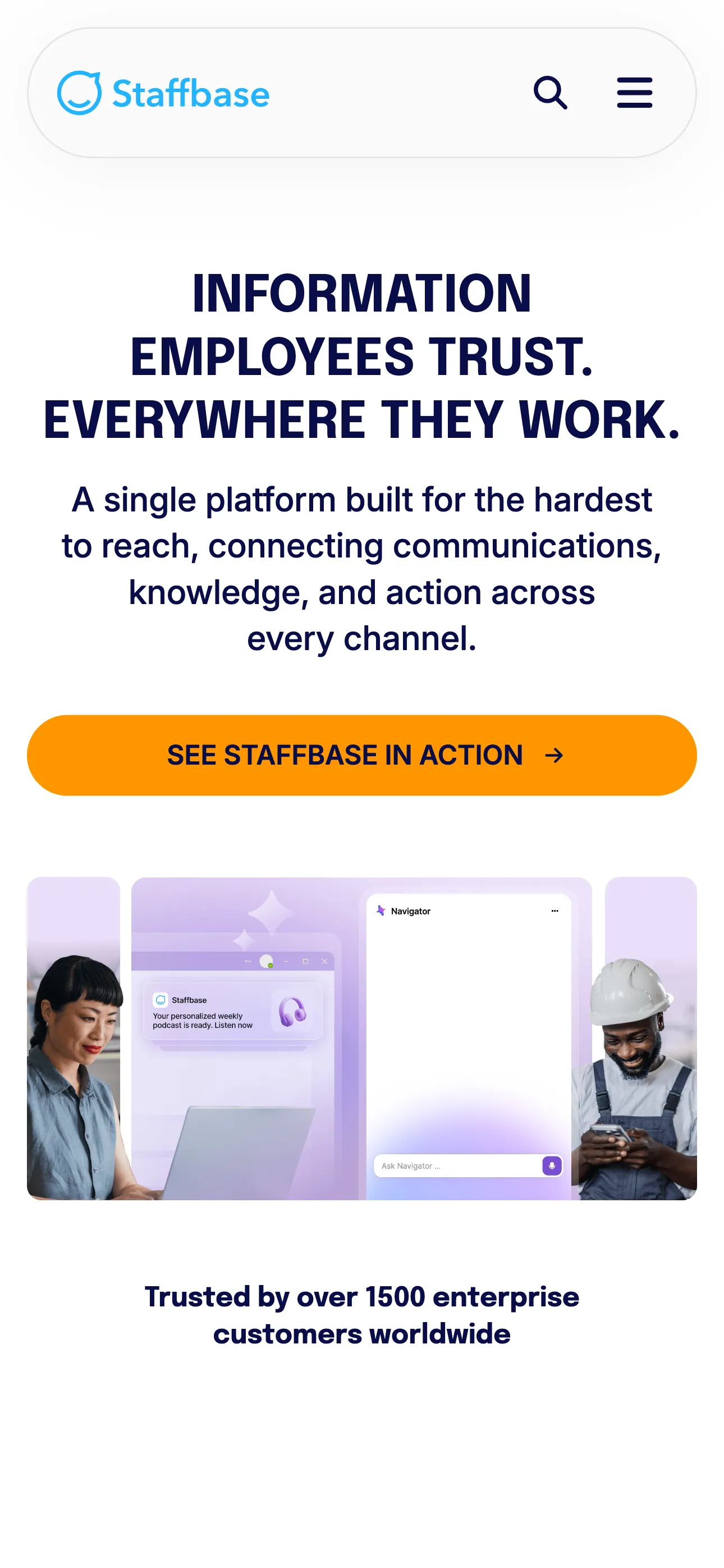
The final stretch was a sprint to leave things well. The navigation was rebuilt from scratch by SensioLabs, going live right before Christmas 2025, with bug fixes and refinements continuing into early 2026, becoming the clearest expression yet of how far the design language had come. The homepage was reworked again against a hard external deadline: the kind that can’t move.
When I handed over in June 2026, the site was in the best shape it had ever been in, both technically and in terms of the brand and design language itself: work that had, by then, started being properly documented in a design system. The component system was clean, and the brand was being maintained by a team that understood it.
What this actually was
A brand applied once to a site is a project. A brand maintained consistently across 8 years of hypergrowth, acquisitions, team changes, and a complete platform migration is something different: it’s craft, exercised continuously over time.
The 2022–2023 unification was the most consequential chapter, even though, for most of it, nothing visible happened at all. It worked because the years before it built something coherent to unify, and the years after proved that real consistency is a sustained commitment, not a single launch moment.